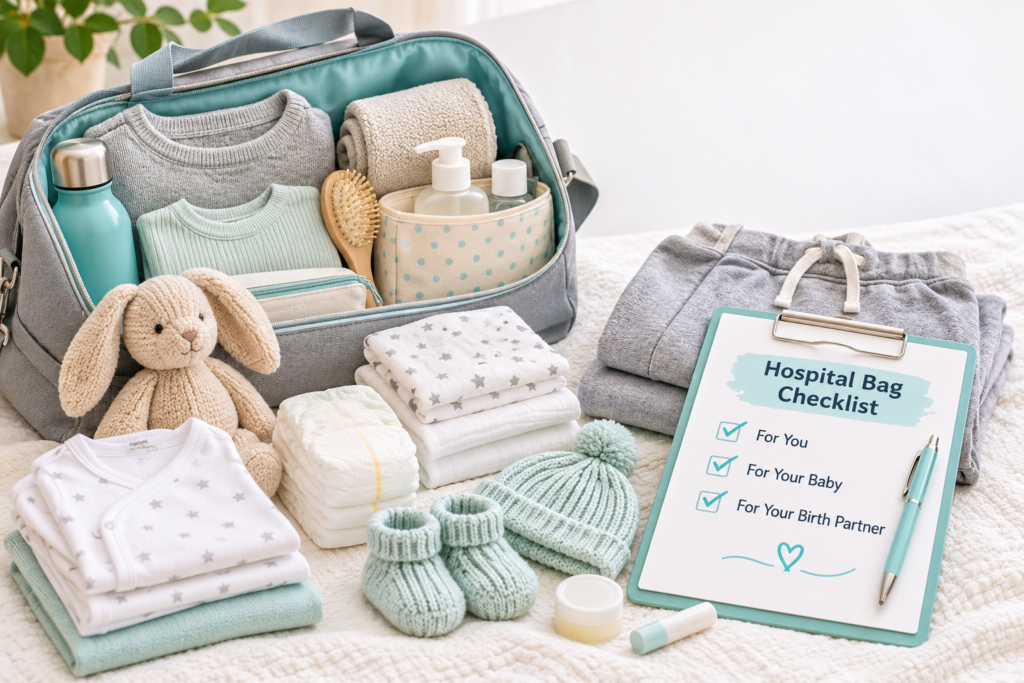
Packing your hospital bag is one of those moments when everything starts to feel real.
One day it’s sitting on your to-do list. The next, you’re folding tiny sleepsuits, wondering if you’ve packed enough snacks and trying to remember where you put your phone charger. Whether this is your first baby or you’re adding another little one to the family, having your bag ready can bring a welcome sense of calm in those final weeks of pregnancy.
The good news? You don’t need to pack half your house.
Your baby won’t need nearly as much as you might think, and your maternity unit may provide some basics, so it’s worth checking what they supply. A well-packed bag with a few thoughtful essentials is usually all you need for labour, recovery and your baby’s first journey home.
This guide will help you pack with confidence, avoid overpacking and focus on what really matters.
Quick answer
Pack your maternity notes, comfortable clothes, toiletries, maternity pads, snacks, drinks and a phone charger. For your baby, bring nappies, vests, sleepsuits and a going-home outfit. If you’ll be travelling home by car, you’ll also need a suitable rear-facing infant car seat.
Hospital bag essentials at a glance
Short on time? These are the key items most parents will want to have ready.
For you
- Maternity notes and hospital paperwork
- Comfortable clothes for labour and recovery
- Maternity pads and underwear
- Toiletries
- Phone and long charging cable
- Water bottle and snacks
- Going-home outfit
For your baby
- Nappies
- Vests and sleepsuits
- Muslin cloths
- A hat
- A blanket for the journey home
- Going-home outfit
For your birth partner
- Phone and charger
- Snacks and drinks
- Any essential medication
- Important contact numbers
- Travel and parking information
When should you pack your hospital bag?
Many parents aim to have their hospital bag packed by around 35 to 36 weeks of pregnancy.
Having your bag ready early doesn’t mean you’re expecting labour to start tomorrow. It simply means one less thing to think about if your baby decides to arrive earlier than planned.
If you’re expecting twins or more, have a planned birth, or your midwife has suggested extra preparation, ask your maternity team when they recommend having your bag ready.
Once it’s packed, keep it somewhere easy to find and make sure your birth partner knows exactly where it is. Future you will be grateful.
What to pack for yourself
Labour and birth can be unpredictable, so focus on comfort rather than trying to prepare for every possible scenario.
Important documents
- Maternity notes
- Birth preferences, if you have them
- Hospital paperwork and any appointment letters
Keeping these together in an easy-to-reach pocket can save a last-minute scramble.
Medication
- Any prescribed medicines
- Details of your usual doses
- Inhalers or other everyday medication, if you use them
Comfortable clothing
Think soft, loose and easy to put on.
- A comfortable nightdress or loose clothing for labour
- A dressing gown
- Slippers or flip-flops
- Warm socks
- Several pairs of comfortable underwear
- Maternity pads
- Nursing bras or supportive bras, if you plan to use them
Comfort matters far more than appearance.
Toiletries and everyday essentials
Hospital stays can be tiring, and familiar routines often feel comforting.
- Toothbrush and toothpaste
- Deodorant
- Face wash and moisturiser
- Hairbrush and hair ties
- Lip balm
- Glasses or contact lens supplies, if needed
- Any personal care items you use regularly
Snacks, drinks and phone chargers
These are often the things parents say they wish they’d remembered. A few easy snacks, a refillable water bottle, a long charging cable and a power bank can make a surprising difference during a long labour or recovery.
For going home
Pack a comfortable outfit that suits post-birth recovery, plus a small bag for used clothes and laundry.
Good to know: If you’d like to use a TENS machine, birth ball or other comfort aids, ask your maternity unit what they already have and what you can bring. It’s usually best to pack only things you know how to use.
What to pack for your baby
Your newborn’s needs will be beautifully simple in those first hours and days. A few essentials are usually more than enough.
Clothing
- 2–3 vests
- 2–3 sleepsuits
- A soft hat
- An extra layer, depending on the season
Babies are experts at creating laundry, but you still don’t need an entire wardrobe.
Nappy changing essentials
- Newborn nappies
- Cotton wool or wipes suitable for newborns
- Muslin cloths
For going home
That first journey home is a moment many parents remember forever. Pack a weather-appropriate outfit and a blanket for the journey.
Safety note: If you’re travelling home by car, you’ll need a correctly fitted rear-facing infant car seat. Practise fitting it before your due date, and use the blanket over the harness rather than under it. A blanket is for the journey, not loose bedding for unsupervised sleep.
What about feeding?
Whether you’re planning to breastfeed, formula feed or are still deciding, it’s worth checking your maternity unit’s guidance before your due date.
If you’re planning to formula feed, ask:
- Whether formula is provided
- Whether ready-to-feed formula is allowed
- Whether you need to bring sterile feeding equipment
Every hospital is slightly different, and a quick phone call can save unnecessary packing.
A few things for your birth partner
Birth partners often focus so much on supporting you that they forget about themselves. They may be at the hospital for many hours, so a few simple essentials can help them stay comfortable and present.
- Phone and charger
- Water bottle and snacks
- Comfortable layers
- Any essential medication
- Parking and travel information
- A payment card or some change for parking
- Important contact numbers
A small backpack is usually all that’s needed.
Organising your hospital bag
Small pouches or packing cubes can make it much easier to find things during labour or after your baby arrives. For example, you could use one for documents, one for toiletries and one for your baby’s things.
You don’t need a specialist maternity bag. A holdall, backpack or small suitcase you already own will usually do the job perfectly well.
What not to overpack
It’s completely normal to feel like you need to prepare for every possibility. Most parents discover afterwards that they used far less than they expected.
You can usually leave these at home:
- Large packs of nappies
- Several outfit changes for every day
- Expensive toiletries
- Bulky gadgets
- Lots of extra baby clothes
If your stay is longer than expected, family or friends can bring extra supplies. Many parents find it more practical to keep a small backup bag ready at home.
Try not to let packing become another source of stress. Simple is usually best.
Before you leave for hospital
Before heading out of the door, take a moment to check:
- Your maternity notes are packed
- Your phone is charged
- Essential medication is easy to reach
- You know your route to hospital and where to park
- Arrangements are in place for pets or older children
- Your birth partner knows the plan
- You’ve checked your maternity unit’s latest visitor guidance
Most importantly, make sure you know when your midwife or maternity unit would like you to call if labour begins or you have any concerns. For more information, see the NHS guide to labour and birth.
Want a printable checklist? Our Baby Checklists page has a short hospital bag list, plus our free printable Baby Essentials Checklist to help you prepare for life at home.
Frequently asked questions
Do I need a separate bag for my baby?
Not necessarily. Many parents use packing cubes or labelled pouches inside one hospital bag. The important thing is being able to find everything easily when you need it.
Should I pack formula?
If you’re planning to formula feed, check with your maternity unit first. Policies vary, and they’ll be able to tell you exactly what to bring.
Do I need to buy a special hospital bag?
No. A holdall, backpack or small suitcase you already own will usually do the job. If you’re planning to buy a changing bag anyway, a roomy changing backpack can double as your baby’s hospital bag and keep working long after you’re home.
What happens if I forget something?
Try not to worry. Most forgotten items can be brought in later by your birth partner, a family member or a friend. The essentials matter most.
A reassuring final thought
Preparing for a baby comes with endless lists, advice and opinions, and it’s easy to feel you should have everything perfectly organised.
The truth is that your hospital bag doesn’t need to be perfect. Focus on the essentials, check your maternity unit’s guidance and remember that most things can be brought in later if needed.
“The most important thing you’ll be bringing home isn’t in your bag at all. It’s your baby.”
A gentle reminder from KidyBaby
When you’re ready to think about life at home, our Ultimate Baby Essentials Checklist and guide to preparing your home for a new baby can help.
Important: This article provides general information and does not replace advice from your midwife, maternity unit, GP or other healthcare professionals. Always follow your healthcare team’s guidance if it differs from a general checklist.

Written by the KidyBaby team. Our guides are researched for UK families and checked against NHS and Lullaby Trust guidance where relevant. They are general information, not medical advice.