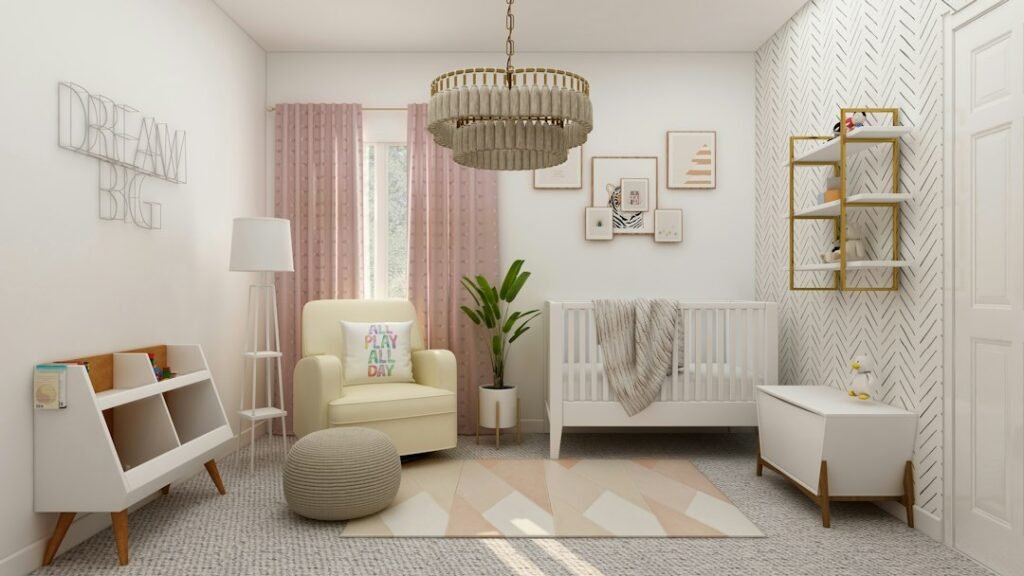
A calm nursery isn’t about expensive furniture or a perfect colour scheme. It’s about a space that feels restful, makes night-time care easier and supports good sleep habits as your baby grows. Here’s how to create one in any size of room.
Quick summary
Keep the room dark for sleep and dim for night feeds, at around 16–20°C. Use soft colours, keep the area around the cot plain and clutter-free, make a comfy feeding spot for yourself, and always put safe sleep first.
Light: dark for sleep, dim for night feeds
Babies gradually learn the difference between day and night. Keeping the room dark at night and for naps helps. Blackout blinds or curtains are especially useful during light British summer evenings. For night feeds and nappy changes, use a dim, warm-coloured night light rather than the main light, so neither of you fully wakes up.
Temperature: comfortable, not hot
The Lullaby Trust suggests a room temperature of 16–20°C for sleeping babies, with light bedding or a lightweight baby sleeping bag. A simple room thermometer helps you check, and you can feel your baby’s chest or the back of their neck to see whether they’re too hot. Avoid placing the cot next to a radiator, heater or in direct sunlight.
Sound: gentle and consistent
Some babies settle better with gentle background sound that masks household noise. If you use white noise, keep the volume low and the device well away from the cot. Others sleep perfectly happily with normal household sounds, so there’s no need to tiptoe around.
Colour and décor: soft and simple
- Choose soft, muted colours such as pale blue, blush pink, sage, warm grey or cream.
- Use one feature, such as a gentle wallpaper wall or a framed print, rather than lots of competing patterns.
- Keep the area around the cot plain and clear. Busy mobiles and bright displays are better in play spaces.
- If you’re decorating, do it well before the birth so paint smells have time to clear, and air the room well.
Organisation: less clutter, less stress
A tidy room feels calmer. Give everything a home with baskets, drawer dividers and a nappy caddy, and keep only what you use daily within reach. A basket you already have is fine; if you’d prefer a dedicated option, take a look at our Room-to-Room Nappy Caddy. Our guide to nursery organisation in small spaces has lots of practical ideas.
“Less stress, less clutter and more time for the moments that matter.”
Our promise to every parent
A cosy spot for you
You’ll spend hours in this room feeding, rocking and settling. A comfortable chair, a cushion for your back, a small table for water and a soft rug make night-time care feel less of a chore.
Tip: Keep a basket within reach with muslins, a book and a phone charger.
A simple, consistent bedtime routine
The environment works best alongside a predictable routine. From a few months old, many families follow a simple pattern such as bath, sleepsuit, feed, a quiet story or song, then bed. Keep it short and calm, and do the same steps in the same order each night.
Safe sleep comes first
Safety note: Whatever look you choose, keep your baby’s sleep space safe: a firm, flat, waterproof mattress, baby on their back, feet to the foot of the cot, and no pillows, bumpers, duvets or soft toys. Remember the NHS recommends babies sleep in your room for the first six months. For full guidance, see The Lullaby Trust.
Browse our nursery ideas for more inspiration, or read our guide to preparing your home for a new baby. For a practical shopping list, see the baby essentials checklist.

Written by the KidyBaby team. Our guides are researched for UK families and checked against NHS and Lullaby Trust guidance where relevant. They are general information, not medical advice.