Plenty of UK families don’t have a spare bedroom waiting to become a nursery. Box rooms, shared bedrooms and one-bedroom flats are the reality for many of us, and they work perfectly well for a baby. With a bit of planning, a small nursery can feel calm, organised and surprisingly practical.
Quick summary
Plan around three zones (sleeping, changing and feeding), measure before you buy, choose furniture that does two jobs, use walls and doors for storage, and anchor drawers and shelves to the wall.
Start with what your baby actually needs
A newborn needs three zones: somewhere safe to sleep, somewhere to change nappies and somewhere for you to sit and feed. Clothes and supplies need a home too. Anything beyond that is optional, so plan around these zones before buying furniture.
1. Measure before you buy anything
Sketch the room on paper with its measurements, marking doors, windows, radiators and sockets. Remember the door’s swing and space to stand beside the cot. A standard cot bed is roughly 140 x 70cm, while compact cots and bedside cribs take up far less floor space.
2. Choose furniture that does two jobs
- A chest of drawers with a changing top replaces a separate changing table. Choose one that fixes securely to the wall.
- A cot with under-bed storage doubles as a home for spare bedding and nappies.
- A comfortable chair you already own can be your feeding spot.
3. Go vertical
When floor space is tight, use the walls. Over-the-door organisers are brilliant for nappies, muslins and creams. Hanging fabric organisers in a wardrobe create instant shelving for folded clothes. Keep wall shelves well away from the cot and anything a baby could pull down.
4. Use drawer dividers and baskets
Baby clothes are tiny and multiply fast. Fabric drawer dividers let you sort vests, sleepsuits, socks and bibs so you can find things in seconds, even in the dark. Label storage baskets by size (0–3 months, 3–6 months) so the next size up is ready when you need it.
5. Create a portable changing caddy
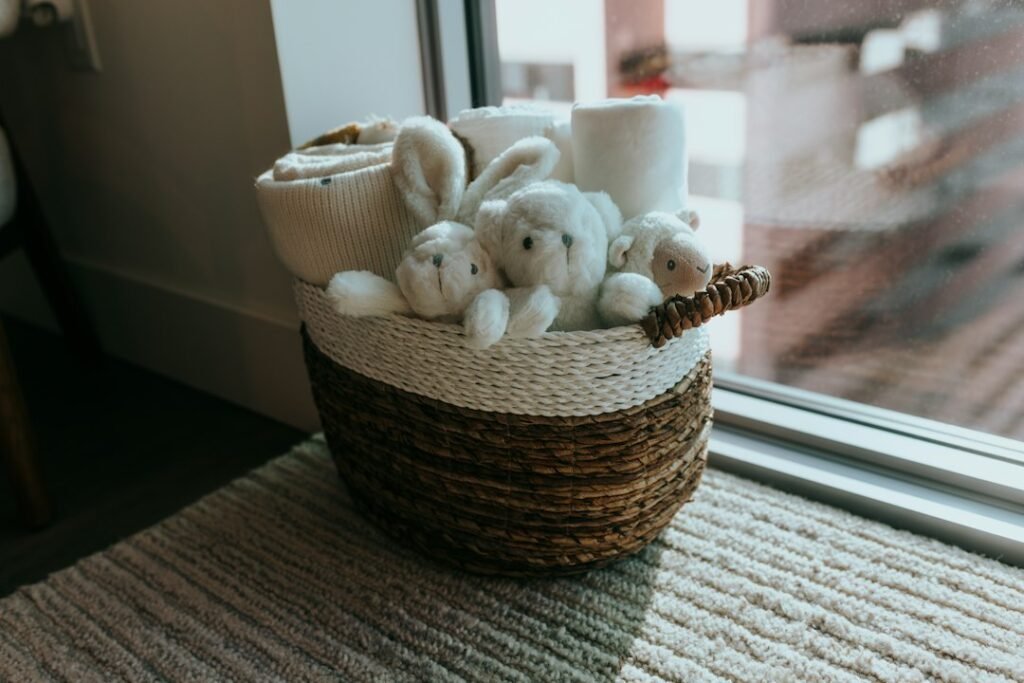
Tip: Instead of a fixed changing station, fill a caddy with nappies, wipes, cream and a spare vest. Carry it wherever you are. In a shared room or small flat, this alone frees up a surprising amount of space. A basket you already own works well; if you need a dedicated organiser, see our Room-to-Room Nappy Caddy.
6. Sharing your bedroom with baby
The NHS recommends your baby sleeps in your room for the first six months anyway, so many families don’t set up a separate nursery straight away. A bedside crib, a set of drawers and a basket of supplies by your bed is all you need. Use a folding screen or curtain if you’d like to create a little “baby corner”.
“Less stress, less clutter and more time for the moments that matter.”
Our promise to every parent
7. Keep surfaces clear
Visual clutter makes small rooms feel smaller and more stressful. Give everything a home and keep only daily essentials on display. Store gifts, larger sizes and spare bedding elsewhere, such as under your own bed or in a loft box.
8. Plan for safety as your baby grows
- Anchor drawers and bookcases to the wall to prevent tipping.
- Keep the cot away from windows, blind cords, radiators and shelves.
- Use cordless blinds or cleats to keep cords out of reach.
- Keep creams, nappy sacks and small items out of reach once your baby starts grabbing.
A simple small-nursery checklist
- Compact cot or bedside crib with a new, well-fitting mattress
- Chest of drawers (wall-anchored) with drawer dividers
- Portable nappy caddy
- Over-the-door or hanging organiser
- 2–3 labelled storage baskets
- Dim night light and blackout blind
Looking for storage ideas? Browse our nursery organisation range, and read how to create a calm nursery environment next. Planning everything you need before birth? Use our baby essentials guide or request the free printable checklist.
Frequently asked questions
Can a baby share a room with a sibling?
Yes, once your baby moves out of your room. Many families wait until both children sleep reasonably well, and use white noise and staggered bedtimes to help.
Do I need a changing table?
No. A padded changing mat on the floor is the safest option. A changing top on a sturdy chest of drawers is a space-saving alternative if you prefer standing.

Written by the KidyBaby team. Our guides are researched for UK families and checked against NHS and Lullaby Trust guidance where relevant. They are general information, not medical advice.